
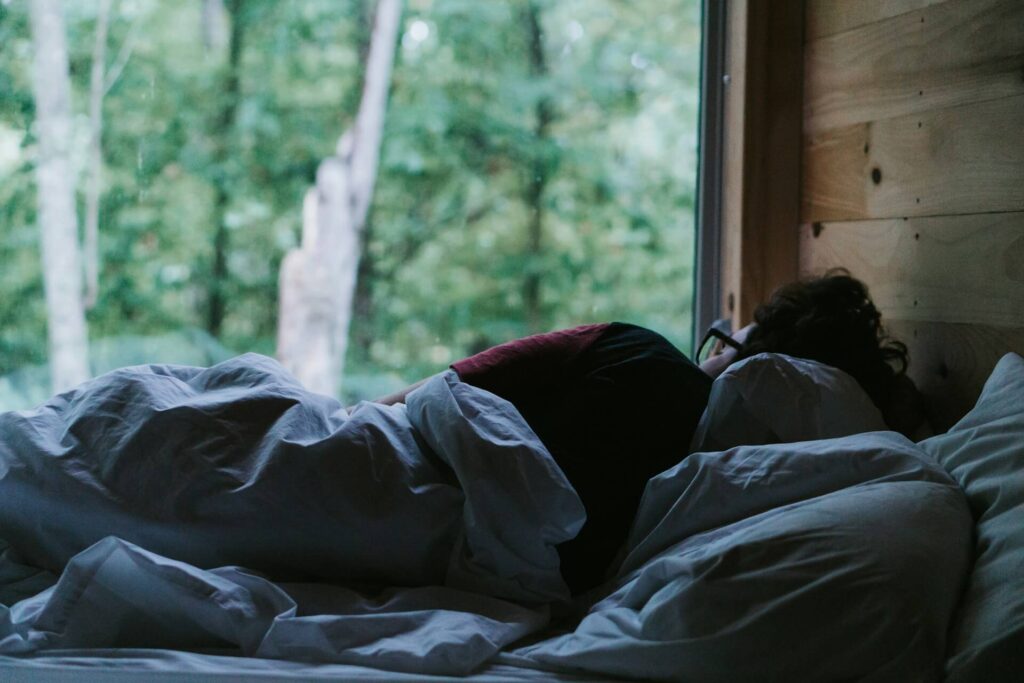
Hypnosis for sleep is something I’ve worked with many clients on – often as a happy side effect of sessions booked for something else entirely. There’s something almost everyone notices after a hypnosis session. They sleep extraordinarily well that night. Not because sleep was the goal. Not because anything was specifically done about it. Simply because the deep relaxation accessed in hypnosis naturally invites the body to do what it already knows how to do: rest, settle, and restore.
For many clients, that single night of effortless sleep is a revelation – a reminder of what rest is supposed to feel like. And for those who come in specifically struggling with rest, hypnosis for sleep offers something that most approaches simply don’t: a way to address the real source of the problem.
The Two Versions of a Sleep Problem
Sleep issues tend to show up in two distinct patterns, and I approach each one a little differently – though both share the same underlying thread.The first is trouble falling asleep: the racing mind, mental loops, the inability to “turn the switch off” no matter how physically exhausted you feel. The second is waking in the night: falling asleep easily enough, but snapping awake at 3am with the mind instantly active and unable to settle back into rest.
Both patterns share the same root – stress and an overactive mind that hasn’t found a way to step aside and let the body do what it naturally wants to do.
The Real Reason You Can’t Sleep
Here’s something worth sitting with: when you can’t sleep, your body isn’t the problem. Your body is tired. Every biological system is signaling that it’s time to wind down. The problem isn’t physical exhaustion – it’s that the mind is too active to allow the body to do what it already knows how to do.
Medication can sedate the body. But it doesn’t address the racing thoughts themselves – and that’s why so many people find that sleep aids help in the short term without ever really solving anything.
Through gentle redirection and a subtle shift of awareness – away from the loop of thoughts and back toward the physical reality of the present moment – hypnosis helps the mind find a comfortable place to rest. When it does, the body remembers exactly what to do.
Why Hypnosis for Sleep Works So Naturally
There’s a state of consciousness you pass through every single night – right at the threshold between waking and sleep. It’s called the hypnagogic state: that dreamy, floating feeling just before you drift off, when the analytical mind softens and the body begins to let go
Hypnosis and the hypnagogic state are remarkably similar. In a session, you’re guided into that same quality of relaxed, receptive awareness – the gentle in-between place where critical thinking eases and something deeper becomes available.
In other words, every hypnosis session is essentially a guided practice of the mental state that leads directly into sleep. Clients aren’t just relaxing – they’re rehearsing the very transition the body needs to make. This may be why so many people sleep deeply after sessions, even when sleep wasn’t what they came in for.
The techniques I use for hypnosis for sleep include progressive relaxation, gentle visualization, and a soft redirection of awareness – noticing the support of the furniture beneath you, following the steady rhythm of your breath, returning to the simple physical reality of the present moment rather than the mental replay of the day or anticipation of tomorrow.
The Bedtime Story You Forgot You Needed
Do you remember what it felt like to be read to as a child? A calm voice. A gentle story. The gradual softening of the world as your mind followed the words somewhere quiet and safe – and then, without trying, without forcing, sleep.
A guided hypnosis relaxation session is, in many ways, the grown-up version of that experience. Not a children’s story – but the same essential ingredients: a soothing voice, imagery chosen specifically for you, and a gentle invitation to let the mind drift somewhere peaceful while the body does what it already knows how to do.
In sessions focused on sleep, I take time to understand what imagery and environment feel most naturally calming to each person. Some have a specific place in mind – a favorite room, a memory of somewhere they’ve felt completely at ease. Others discover it in the session itself. The imagery is always personal, always specific to the individual, and always designed to invite rather than force relaxation.
The audio recording from each session becomes a tool clients can use at home – something to return to whenever sleep feels elusive. Many find it becomes a cherished part of their evening routine.
What Clients Notice
Most people who come to Inner Center for other reasons – habit change, stress, past life regression – mention the same thing afterward: they slept more deeply that night than they had in months.
For clients who come in specifically for hypnosis for sleep, the shifts tend to be gradual but meaningful. A quieter mind at bedtime. Less dread around the idea of lying awake. Growing confidence in their ability to fall asleep. And eventually, for many, a return to the natural, effortless sleep they had started to think was gone for good.
Clients have shared that hypnosis helped them access a depth of rest they hadn’t experienced in a long time – not through sedation, but through finally giving the mind somewhere comfortable to go.
Is Hypnosis for Sleep Right for You?
If your sleep struggles are rooted in stress, an overactive mind, racing thoughts, or an inability to genuinely unwind, hypnosis may be one of the most natural and effective approaches available.
It works with your mind rather than around it. It addresses the actual source of the problem rather than masking the symptoms. And it gives you tools – personalized relaxation techniques and audio recordings – that you can use independently, long after our sessions together.
If you’re in Portsmouth, NH or the Seacoast region and curious whether hypnosis for sleep could help you, I’d love to have a conversation.